Category Archives: Opinion

Shame and sharrows

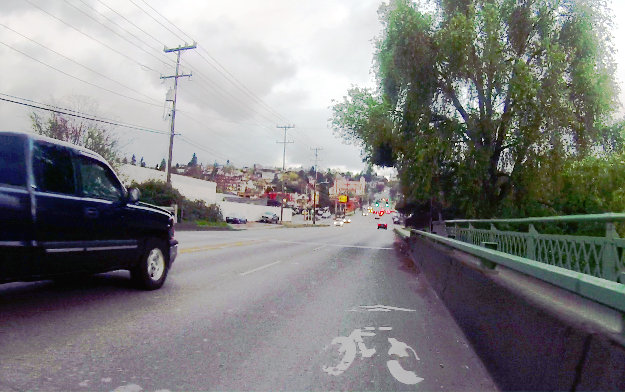
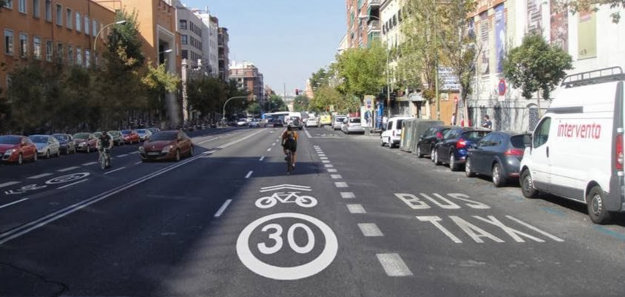
It is no secret that urban infrastructure takes generations to be implemented city wide. Thus, if you want to correct a big mistake now the changes won’t be happening any time soon. That is why everywhere in the US you see lots of sharrows and only a few segregated bikeways.
If you pay attention you’ll notice that in the previous decades driving was THE mean of transportation. That’s why you see highways going through downtown and dividing cities, streets without sidewalks, and a shamefully low number of segregated bikeways that provide for an equally low percentage of bikers.
But going back to the 50s, 60s and 70s, when politicians and people only cared about cars, some urban designers tried hard to provide even a minimum cycling infrastructure. I can imagine how hard urban designers had to fight in order to get sharrows approved when everybody was crazy about oil and cars.
That’s why I really despise new sharrows being installed instead of segregated bikeways, but I’d like to praise the few great designers who envisioned a multimodal world half a century ago.
shameAndSharrows

faltantornillos.net

Sport and urban cyclists

There is almost a unique way of biking as bikers are. Each person has its own riding style. Some people prefer doing it slowly while enjoying the travel. Others are in favor of speed and adrenaline, and do not hesitate in counting how many time they spend on the streets without paying any attention in what surrounds them. This points is the main source in distinguishing cyclists in broad strokes.

We have sport cycling as a valid exercise which can be done within a city or a village. These cyclists are dressed in highly colored, fashion maillots, commonly in accordance with the official strip of a particular cyclist team. They also wear helmet even in places where it is not compulsory and ride so fast that can overtake cars. In front of this view, we see the urban bikers.

There is a myriad of them who are characterized by riding not so fast and most of the time in a friendly way. They use the bike to go to work, carry children to school, go out with friends, etc. Similarly as pedestrians, the garment they wear is variate. It does not matter whether you wear jeans, smart dresses, scarfs, tracksuits, you name it. Usually the bikes are not so expensive as in the case of sport cyclists and the bikes they use can be more than 30, 40 or 50 years old. The natural place of sport cyclists are the streets whereas urban cyclists prefer bike lines or also streets. I will talk more about this point in the future.

Public bikes vs Public infrastructure

Madrid’s public bicycles are great: they include fenders, front and rear lights, they are electric, they have gears, a chain saver and even a front basket. There are plenty of them throughout the city and they aren’t expensive to use.

However, this doesn’t mean it is widely used. As a matter of fact, Madrid has 3+ million inhabitants but BiciMAD is only used about 150.000 times a day.

But why?. Well, on the one hand Madrid is quite a walkable city, but it’s also true that there are a lot of drivers which increase pollution way too much. The main reason, I think, is because the lack of bike related infrastructure. I had a really hard time finding bike ways, and even when I did, they were often blocked by tables, chairs or people because they weren’t properly differentiated. Additionally, most people will find frightening having a bike way you have to share with cars, which is what Madrid does on big avenues.

Therefore, I’d love politicians all around the globe not to think about public bicycles as an easy way to appear in the media, but to think about it in a global and organic way: Create a bike culture, provide good and safe facilities, and people will forever love you. Like the lads of en bici por Madrid ask.

bicimad

faltantornillos.net

Things are changing

Moving on a bike is beneficial to you and people around you. It enhances your mood and indirectly your neighbors’ health since you do not produce pollution. These statements seem quite clear but incorporating them is quite difficult. This change can be produced by social pressure as it was done in the Netherlands in the 70’s, or by selecting the right persons in key positions. Some people were surprised in seeing the former London mayor Boris Johnson in the city metro some years ago. It appeared to them a leading figure could not use the public transport. Obviously, this is wrong. Going a step further, putting elected urban cyclists in the public institutions is specially advantageous. In Valencia both, the mayor and the sustainable mobility city councilman, have been practicing cycling for ages and even participating in demonstrations against deaths in car accidents. The new point of view regarding biking has allowed the city to overcome the pig-headedness of the former government and implemented mobility changes from the biker perspective, producing a tangible progress in sustainability. Although there is a way to achieve the total sustainability, a lot of cities and villages around the world are moving in the right direction step by step.

Bicycle innovations

Although we don’t know for sure when the first ever bicycle was designed, it clearly goes back hundreds of years. Since its invention, the bicycle has undergone massive innovation yet there’s more on its way. Here are some of the new things you may find the next time you go to the store, but be careful, some of these new innovations may not be ideal:

The shaft-driven bicycle

Shaft drives operate at a very consistent rate of efficiency and performance, without adjustments or maintenance, though lower than that of a properly adjusted and lubricated chain.
shaft

The belt-driven bicycle

A belt-driven bicycle is a chainless bicycle that uses a toothed synchronous belt to transmit power from the pedals to the wheel. The application of belt drives to bicycles is growing due to the low maintenance and lubrication-free benefits.
belt

The hub gear

Hub gears are sealed within the hub, which protects them from water, grit, and impacts. Thus hub gears usually require less maintenance. Additionally, Hub gears can change gear ratios when the rear wheel is not rotating.
hub

Airless bicycle tires

You’ll never have a flat tire if you use airless bicycle tires. Also, whether solid or not, they obviously require less maintenance.

faltantornillos.net

The 5 minute super-tuneup

Do you want to stop sweating while biking, avoid your chain getting stuck and bike nice and easy? Then you need the 5 minute super-tuneup!.

All you need is an air pump and bicycle chain lubricant, and here is how it goes:

  1. Pump air into your wheels until they’re 5-15psi bellow the maximum, which you can find written on your tires.
  2. On your handlebar, use the brake barrel adjuster to make sure your brakes work flawlessly (specially if you’re bound to bike in the rain). Tighten the adjuster locking ring after you’re done.
  3. Also on your handlebar, find your derailleur adjusters and, little by little, play with them until there’s no friction between your chain and the derailleur itself.
  4. Slightly lubricate your chain and let it dry for an hour or two.

Depending on how often you bike you, may want to do the 5 minute super-tuneup once or twice a month. Trust me, it’s really worth it! And if you want to know more, check this bicycle maintenance wikibook.

San Francisco’s Critical Mass

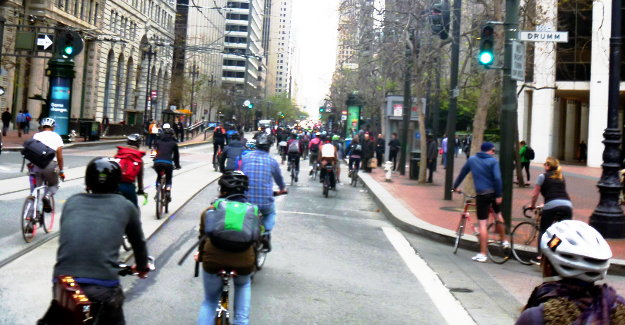
I’ve only done it once, but it was a blast!. San Francisco’s Critical Mass begins at 5:30 on Justin Herman Plaza. There are hundreds of bikers dressed both formally and informally, and is escorted by the police for courtesy and security.

The environment is quite festive, I remember bikes covered with flowers, bubble making machines mounted on cars, music, bikes that look like a harley davidson, etc. Plus people kindly stop cars and make sure the mass is dense and gap less.

The ride itself is nice and slow, allowing for people of all ages to enjoy it while also paying a visit to SF’s interesting spots. Additionally, the hills and the dusk light makes for great pictures, not to mention visiting the seaside and the Palace of Fine Arts at night.

sfCriticalMass

faltantornillos.net

Seattle’s Critical Mass

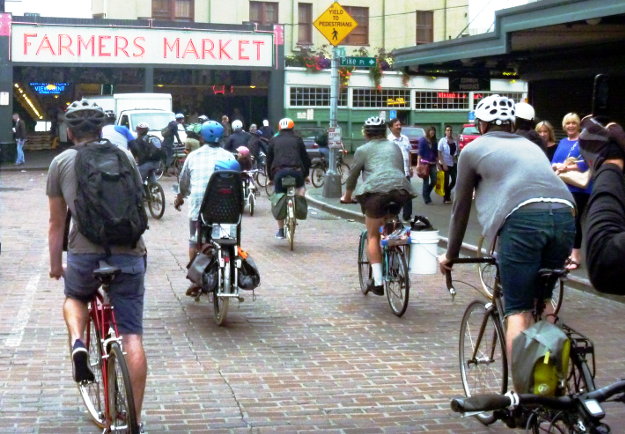
Seattle’s Critical Mass beings at 5:30ish at the Westlake Center. There, bikers socialize and, little by little, we ride in a big circle while also ringing our bells. At some random point, when most have joined, we depart without a planned destination.

Seattle’s Critical Mass always happens, rain or shine, although attendance greatly depends on the weather, ranging from tens to about a hundred. During these rides we try not to go through steep hills but sometimes there isn’t a more suitable options (or things are too chaotic to avoid them).

Still, you always get to meet people and discover interesting parts of the city. During my first Seattle’s Critical Mass I ended up on a birthday party on the other side of the city at 3am, but in other occasions we ended up riding around the International Fountain, visiting a p-path on the top of a building, and so on.

seattlesCriticalMass

faltantornillos.net

Bikes vs cars?

There are two basic ways to cross a city on a bike. On the one hand, there is the officially preferred path which consists on a bike line commonly designed by non-cyclist technicians (we will deep in this issue in the future). On the other hand, some bikers are prone to share the pavement with cars without physical barriers.

This last point has to do with the lack of secure alternatives within the cities and it’s likely to create a clash between the long-time favored, polluter motor vehicles versus the green model of sustainable transport on a broad scale, although bikes have been with us for ages. This is precisely one of the fears of compulsive car drivers: losing privileges in favor of bicycles.

What they do not see is that the more bikes in the streets, the better air we breath, not to mention the cuts in car accidents and their gravity, or the reduction in oil dependency among others. One of the easy-measured key indicators in the bad relation between cars and bikes is the number of horn hokes you hear when riding in a highway. Drivers who are aware of this issue respect cyclists as they feel us as part of the community and they could also be bikers themselves on the weekends. This synergistic model is what a lot of local governments are looking for. But dozens of years allowing everything car-related (including alarming dead figures in car accidents) is making this ideal coexistence tough. Nevertheless, important steps are being made towards the development of the bike movement and we thank them as part of the search of a better future.