Category Archives: Valencia

Things are changing

Moving on a bike is beneficial to you and people around you. It enhances your mood and indirectly your neighbors’ health since you do not produce pollution. These statements seem quite clear but incorporating them is quite difficult. This change can be produced by social pressure as it was done in the Netherlands in the 70’s, or by selecting the right persons in key positions. Some people were surprised in seeing the former London mayor Boris Johnson in the city metro some years ago. It appeared to them a leading figure could not use the public transport. Obviously, this is wrong. Going a step further, putting elected urban cyclists in the public institutions is specially advantageous. In Valencia both, the mayor and the sustainable mobility city councilman, have been practicing cycling for ages and even participating in demonstrations against deaths in car accidents. The new point of view regarding biking has allowed the city to overcome the pig-headedness of the former government and implemented mobility changes from the biker perspective, producing a tangible progress in sustainability. Although there is a way to achieve the total sustainability, a lot of cities and villages around the world are moving in the right direction step by step.

How not to build a bike line

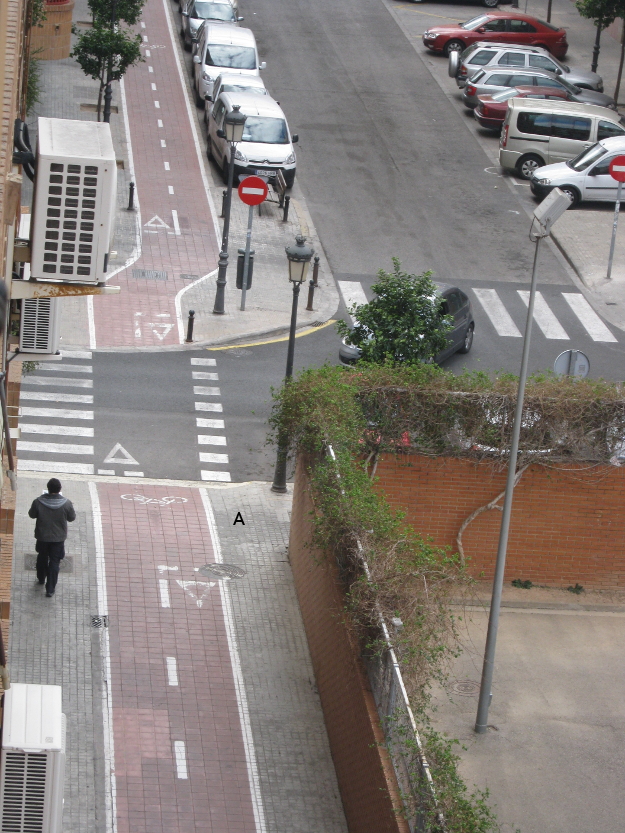
Bike lines constitute an easy and visible way to put on a brave face regarding green politics. This is clearly how non- or little-cyclist believe it. In real life, it is far more complicated. Bike lines produce a false feeling of security while riding, specially when it is shared with pedestrians. Accidents are produced by distractions or by their bad locations. For example, look at the point A in the next photo.

1

The fact of the small distance between the bike line and the wall, makes it perfectly possible to suffer an accident. This idea is reinforced if you take into account that the building at the right is a school and children run freely in working days.

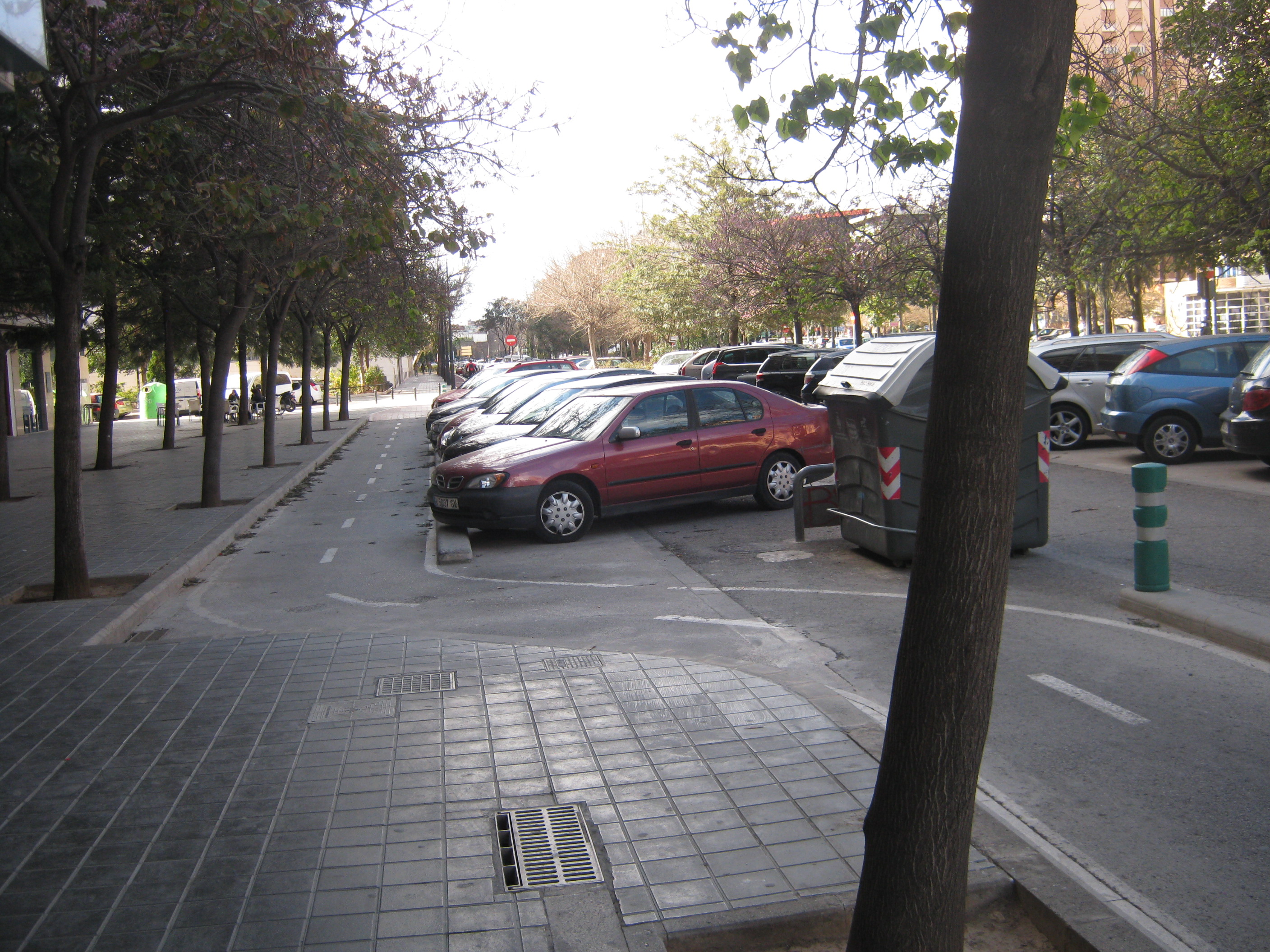
Sometimes bike lines are given in to cars. In photo number 2, the bike line curves in an almost chaotic way in order to respect the parking car. Again, most cities are proned to cars, not to people.

2

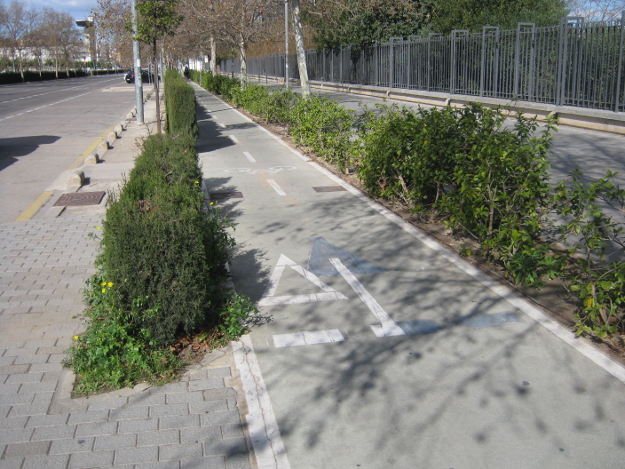
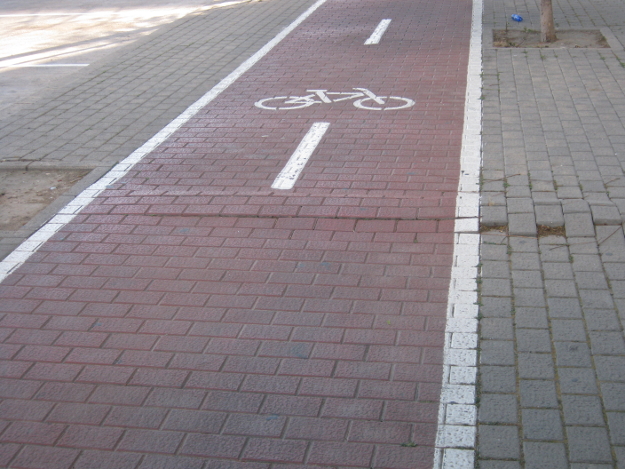
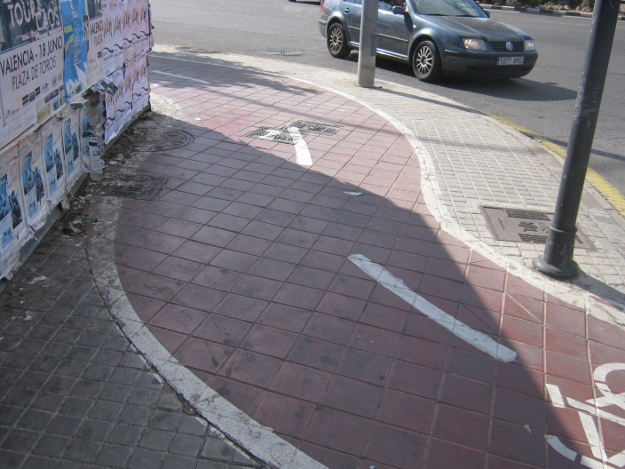
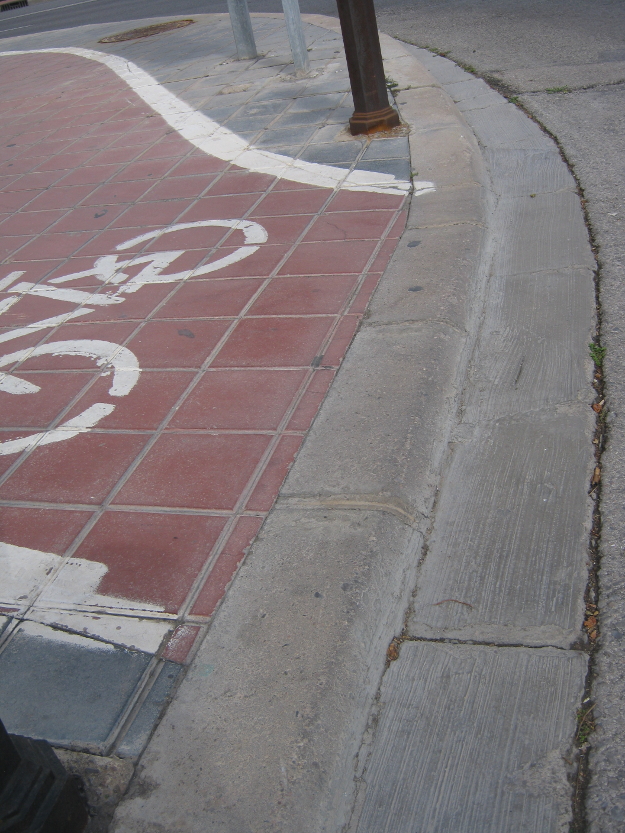
Few times bike line colors confound cyclists, like in the case of photos 3 and 4, both corresponding to the same avenue and different pavements. Here, red and green are used instead of define a homogeneous color.

3 4

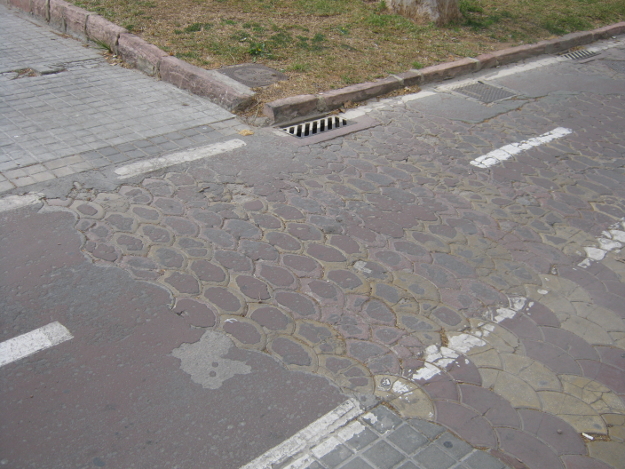
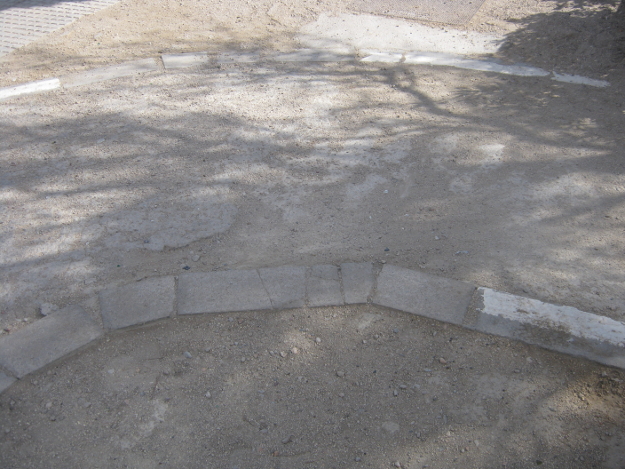
Photo 4 also shows obstacles and potholes make riding difficult. Constructing a bike line is much more than just painting lines in the pavement. Maintenance is needed and cases like photos 5 and 6 should be avoided.

5 6

Absurdities like photo 7 can make us thinking in another reason why bike line should be on highways, not on pavements. Here, people and bikes are virtually incompatible.

7

Moreover, curbs should be considered to facilitate an easy riding and avoid unnecessary jumps such as those in photo 8.

8

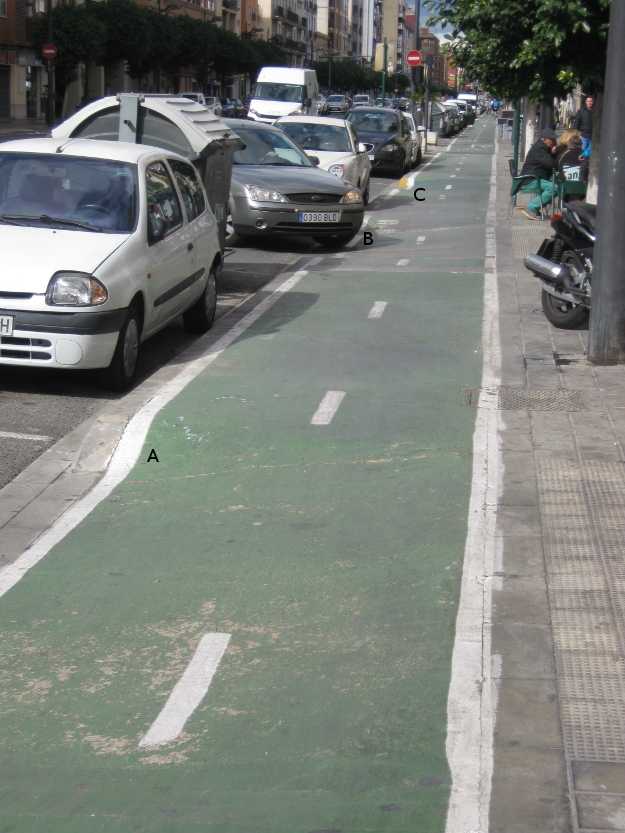
Finally, if you want a free ticket to the roller coaster, just ride in the photo 9, where there are three ups-and-downs to access to car parkings corresponding to points A, B and C.

9

Valencia’s Critical Mass

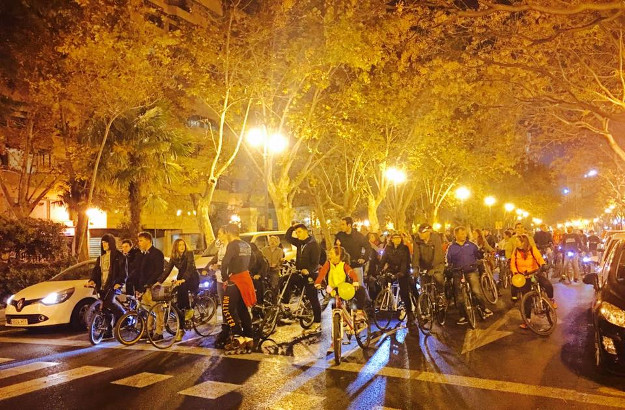
I am going to talk about the Critical Mass in Valencia (Spain) today. It starts at the Virgin square in downtown the first Friday of every month at 19:30, no matter if it is raining, the wind blows, is a holiday or the sun shines. This fact as well as the climatic variations in the four seasons make that the number of participants varies along the year, reaching the highest figures in spring, summer and the first months of autumn.

It is particularly interesting that the Critical Mass has no direction, neither organizers. This way it can end in the same place where it starts, the beach, the former riverbed, close villages and so on.

Regarding the bikers, everyone can participate in this ride from children to senior citizens since the reached velocities allows to enjoy it without even sweating. Sometimes politicians come such as Giuseppe Grezzi, the current Mobility Advisor who is making efforts in favor of sustainable mobility. Moreover, one can see strange bicycles like the bike-monsters, the “bici-gelat” (a horchata truck bike, being horchata a typical Valencian tiger nut milk drink) or the odd boat-bike which swings as it was a true boat. People in handbikes and skaters are also welcomed. To contribute to the festive ambient, participants dress up like in carnival from time to time.

As far as logistics issues are concerned, police closes the Critical Mass to calm traffic almost every time. Indeed, bikers close themselves perpendicular streets to where it passes chatting to car drivers to pacify them because not each and every driver is a good one. What is more, the Spanish legislation is partly unknown, specifically the point which indicates that a group of cyclists is treated as a sole unit referred to zebra crossings, stops, traffic lights, traffic circles… One important point constitutes the fact that the bus line is respected as it represents a path of sustainability.

Finally, it ends with a huge applause and the ride is a success due to the collaboration of all people involved.

Foto by Antuan Toledo

Foto by Antuan Toledo