On urban cycling. Mikael Colville-Andersen
Leave a reply
Awful bike-lines are located in several zones of Valencia. Although the new government is making efforts to eradicate them, there is still a long way to do. One of these is the infamous bike-line in the El Puerto avenue. It was built some weeks before the America’s cup back in 2007.
The set is discouraging as you can see in the photo.
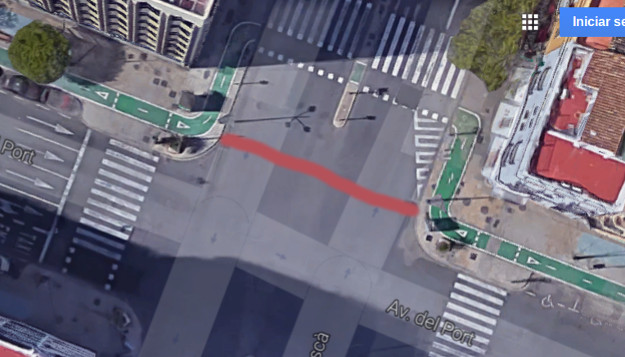
Not only forces you to make an unnecessary turn, but also this particular point presents additional problems. Instead of following a logical path marked by the red line, bikers must also deal with reduced visibility thanks to the stand and some distracted pedestrians as this bike-line goes on the pavement.

Another example of a bad bike-line is shown next.

In this case, there is not enough distance between it and the parked cars. It can be that if a co-pilot does not realize a bike is approaching from the right or the left, an accident is guaranteed.
One common problem for cyclists in Valencia is the existence of light-traffics in amber. I am not talking about the traditional cycle of green-amber-red, but rather amber or no-light specially in turns to the right. According to the Spanish law, cars should extreme attention in this circumstance. The point is the opposite to what should occur. Most car drivers do not take it into account and hence crash happens sometimes causing deaths. What is more, these signals are put next to zebra crossings while the bikes and pedestrians traffic-light is in green. In the next pictures you can see a classic example.
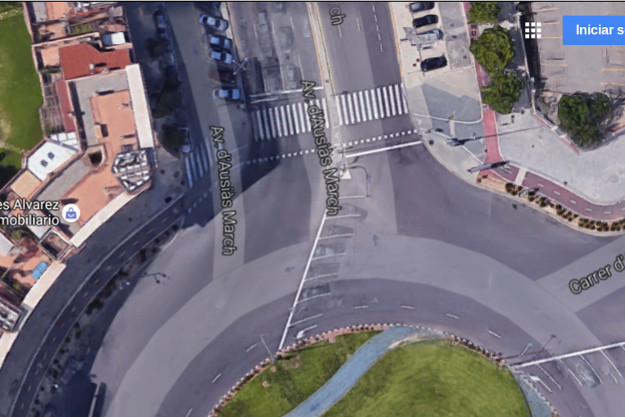
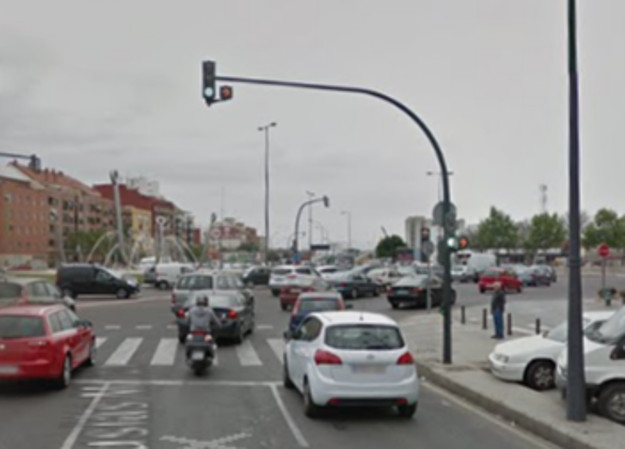
In some other parts in the city in which no bike-line is involved, riding on the road is also dangerous with amber light-traffics:
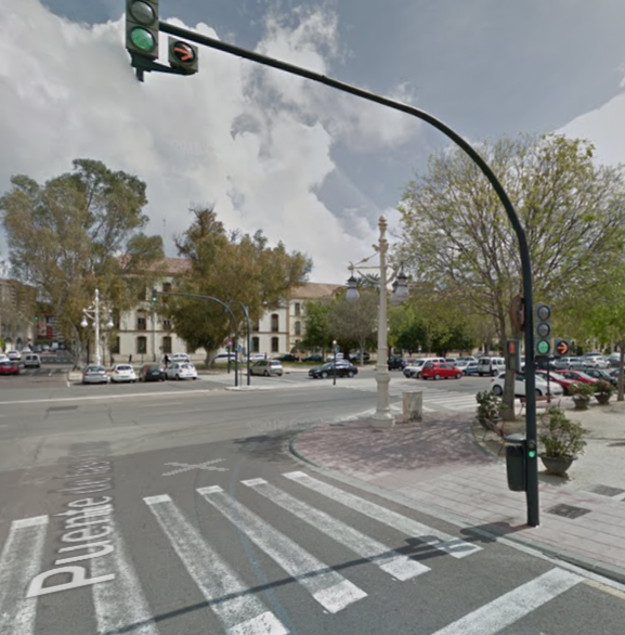
In this case smart assess try to overtake you by accelerating their cars while you are starting to ride. This causes a dangerous situation because most of them are idiot who do not care imperil their lives and those of people surrounding them.
There is a curious infrastructure in Valencia which I rarely see in any other great city in Europe or at least in the most advanced European countries as it comes to sustainable mobility. They are the “urban highways”. In other words, I am referring to avenues with three, four, five or even six lines in each direction. This causes a lot of pollution and noise. One secondary effect consists of cars not respecting the traffic-light line. In the next figures, you can clearly see them on the road.

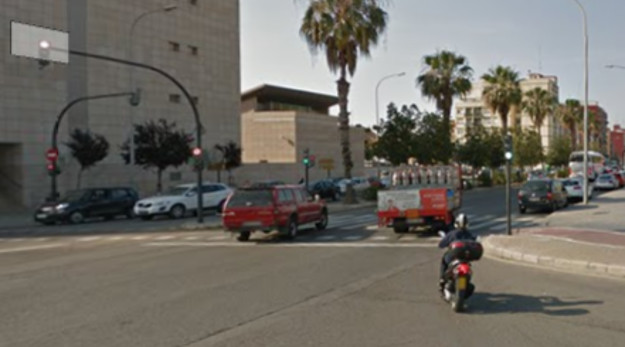
And still lots of cyclists have had fights with cars and motorcycles which have not respected it. It is just a matter of time that a crash occurs.
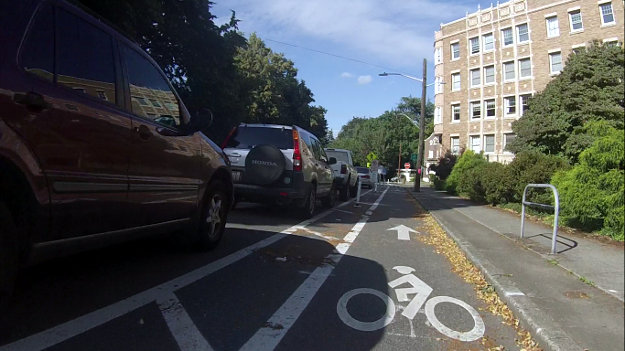
Getting parking right is key when it comes to biking infrastructure: do it wrong and you’ll create a deadly trap waiting for you to get doored, do it well and create a barrier that will improve the cyclist’s security.
If you think about it, often times drivers ride alone, which means that, often times, cycling on the right of parked cars is safer. Additionally, cars parked on the left of bikeways are a great substitute for physical elements plus you get them for free. Additionally, if cars park on the left of bikeways there is no interference between bicycles and cars when the later are about to park.
Seattle has at least a dozen different ways of designing parking, ranging from terrible through excellent, here is a very good one.
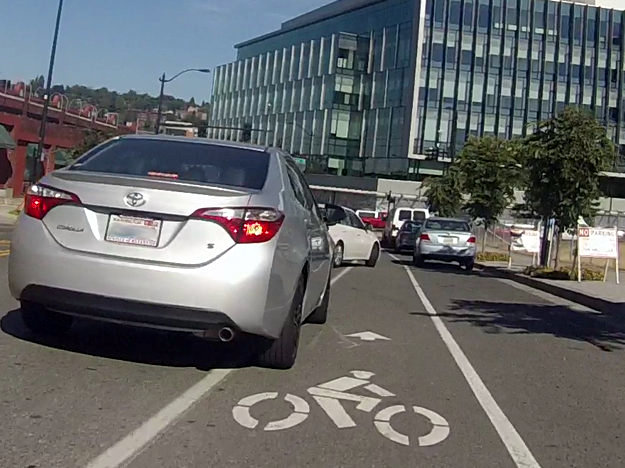
Just like werewolves get wild at full moon, and gremlins get really angry if they are fed after midnight, inner cities are a madness jungle at 5pm in the US.
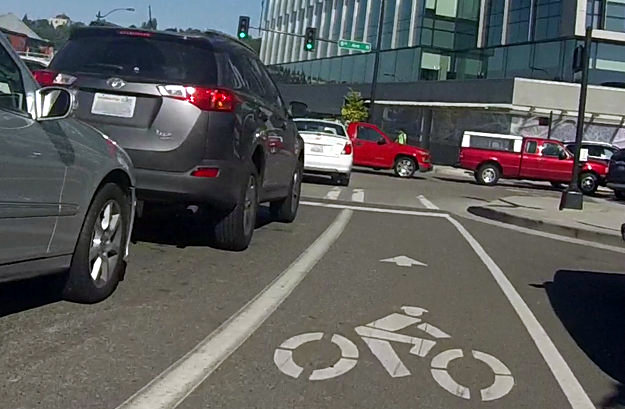
Drivers block the intersections, stop at crosswalks, invade bike ways, and honk the horn for no reason.
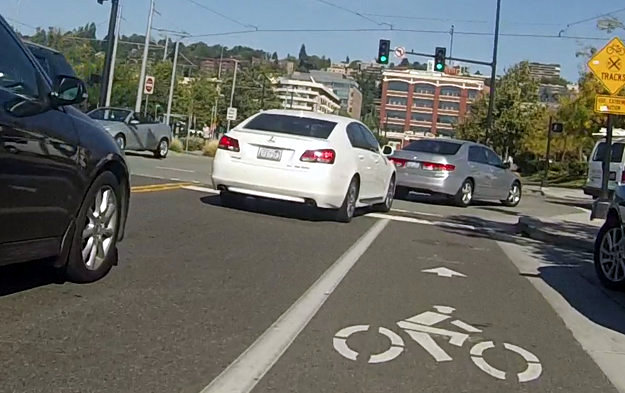
Adrenaline pumps up, anxiety jumps, futile attempts to advance are tested, and resignation skyrockets because you are stuck in a traffic jam.
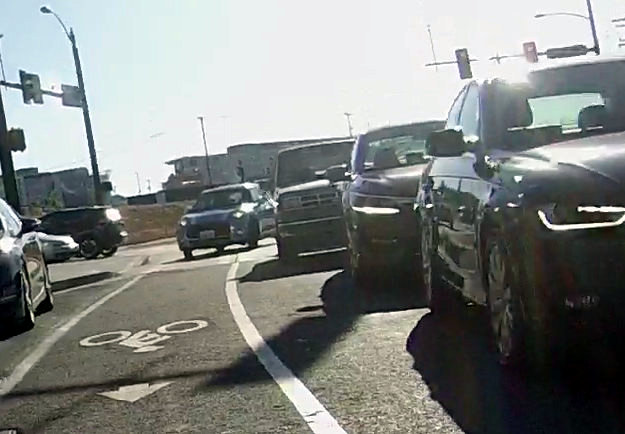
And in places like Manhattan this is the norm.
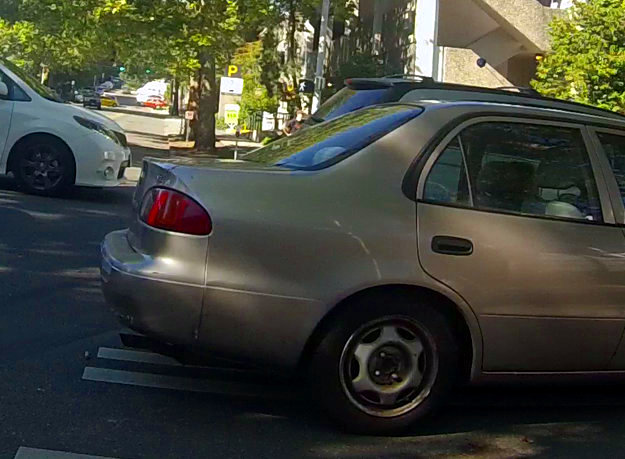
A couple days ago a fellow biker asked me “Do people just get crazy when they’re driving?”.
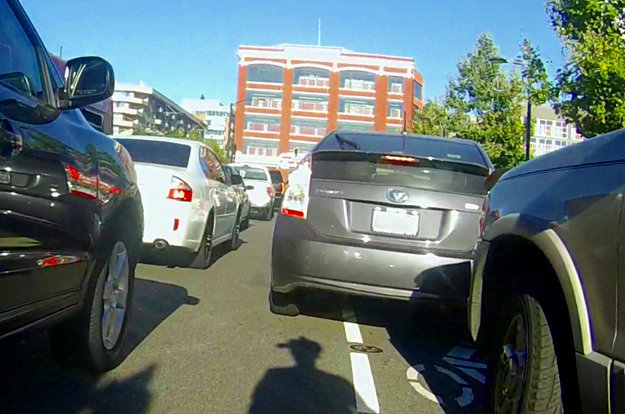
This is the result of 50 years of wrong transit policies by misguided politicians. And there are simple solutions that could solve it in a matter of months, here are some I’ve seen working in other countries:
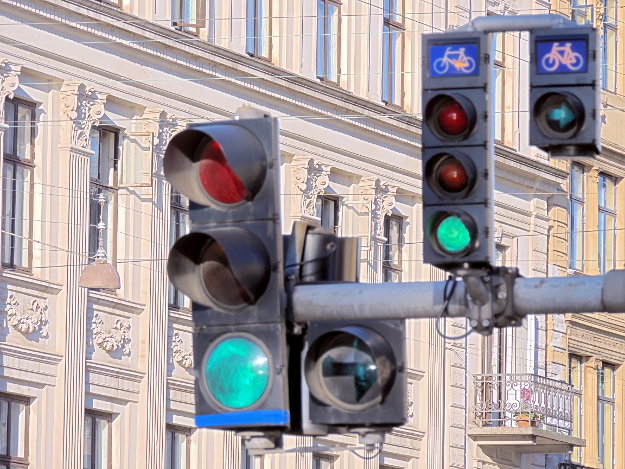
When traffic lights look like this
For several years I wished a gap on Seattle’s University bridge bikeway was fixed. It was something very obvious and that clearly endangered all the cyclist. And I wasn’t alone: It was very clear when the Seattle Department of Transportation created a public map to let people report fixes. That specific point was full of reports and, lo and behold, it got fixed almost immediately.
In these times when budgets are always under scrutiny, it’s vital to prioritize adequately what gets done and how. Another tool widely used here is Find it fix it, a mobile ap you can use to report potholes and other elements in need of a fix, and you can rest assured the SDOT will fix it on a timely manner.
Additionally, Seattle’s Greenways is an initiative that empowers neighbors to decide which streets should be made safer.