The XV Iberian Congress: Activities

As I recently talked about, the XV Iberian Congress about urban biking is one of the most important events which will take place in Valencia the next May. The city will vibrate with this international meeting and the organization guarantees 5 days of intense, high-instructive, deep-learning experience. If you want to register for the activities, you have to fill in the congress page (only in Spanish at the moment I write this post).

What about the activities? All the five days will be plenty of activities. On the 16th May a riding on Valencia will happen and Morten Kabell, Copenhagenize General Manager, will open the congress with the speech Bicycle and city. From Thursday 17th to Saturday 20th May, an impressive amount of activities will take place in three different locations. Round tables, speeches, discussion boards and presentations will delight the attendees, and participants will shared ideas and connections. Mobilities and genre, politics, European funding regarding bike infrastructures, logistics, digital tools for sustainable mobility, how to evaluate the quality politics in the urban cycling design, social benefits, technical route in Valencia, the bike tourim development, bike and children, the Bike Equity net, mass media and bikes, the bike logistics evolution, health and mobility, intermodality, citizen sponsorship, working with bikes, air quality measuring, urban transformation and neighbor struggle, … are some themes which will be treated in these days. Routes and parties will also be enjoyed. The closing event will be carried out by Lake Sagaris.

IMPORTANT: Plan in advance after checking the congress program as most activities are determined in parallel. Thus, it is impossible to assist to all of it.

Moreover, the third Cyclist Women Meeting will be a reality on Saturday and Sunday. Women will enjoy several workshops from secure traffic to bike mechanics at all levels, and two ridings: BTT and road riding. All these events are exclusive for women, so men are forbidden here.

Finally, a riding in the vegetable garden, one of the treasures of Valencia, is planned on Sunday morning, whereas the Con bici (the supra Spanish association regarding urban biking) assembly will say good bye to these extremely, emotional, passionate, full of bikeholics and fun days, period.

Flowerpots to increase quality of life

The use of flowerpots is a clear example of what is called “a soft pedestrianization”. Soft because its impact is low, does not require complex constructions and the cost is minimum. Moreover, it allows bikes to cross between them always having in mind that pedestrians should be respected in these pedestrian areas. By respecting them I mean biking at low speed and letting them be. Otherwise the cohabitation is difficult. Moreover, think about the pyramid I proposed some time ago.

We have seen its use in several cities like in the photos bellow.

The XV Iberian Congress

Every year the Iberian Congress takes place in a different city. Vitoria-Gasteiz, Lisbon, Malaga, Vila-Nova de Gaia and Zaragoza organized it from 2012, and this years it is the turn to Valencia from the 16th to 20th May. This international congress encompasses projects and initiatives related to urban bicycle. The official slogan for this edition is Everybody counts towards the friendly city. The congress aims at supporting the cultural transformation towards the paradigm change which see the city in a new, healthy and sustainable way. It has four “friendly axis” as thematic blocks:

  • The city within everybody grasp: It considers bikes from a day-to-day perspective and several themes are treated such as:
    • Bicycle and genre
    • Disable people mobility
    • Children autonomy and bikes
    • Riding to work, school, university, market center, etc.
    • Bicycles and intergenerational and intercultural relationships
  • Bike is cooler: It focuses on the subjects:
    • Bicycle and health
    • Bike-economy
    • Social benefits and bicycle
    • Environmental benefits
  • Bicycle challenges: With the specific purposes of:
    • Education to improve bicycle use
    • Communication, promotion and biking
    • Laws and bicycle
    • Other bike modality (road cycling and mountain biking)
    • Intermodality (bike plus public transport)
  • Shared cities: With special attention to:
    • Urban planning and participation into the public area
    • Politics to the City for everybody
    • Politics to the bike use improvement

Two more events will take place in parallel to the Iberian Congress: The III Cyclist Women Meeting and the II Bicifest. The Cyclist Women Meeting will take place on 19th and 20th May. Its main purpose is to visibilise their needs, rights and spaces in society as it has coincided with the bicycle evolution through history, as well as reducing the gender gap.

On the other hand, the Bicifest (a local bicycle big event from 18th to 20th May) will consist in a lot of activities opened to the general public in order to bring the world of cycling to each of the city corners and its metropolitan, ciclable area.

You will have more information in the coming future.

A different bike line

Burgos is a Spanish northern city in which at least one bike line goes on the road. This time it has not any physical separation with other vehicles. The fact of being designed next to the bus line, on its right, protects it against a lack of civic car drivers behavior which can cause bike accidents. In addition, bikers cycle more secure as bus run frequency is considerable lower than cars one. Moreover, the bike line follows the same route as the bus does. This is important as this way the optimum path is guaranteed avoiding unnecessary turns.

Visca el carrer (Long live street in Valencian)

I went to an interesting exhibition about cities development in Valencia, Spain, last January. The first part dealt with the conflicts between personal interests among the different actors in the cities regarding mobility, and why dialogue is essential to overcome them. Common claims such as I want to walk on the streets without fear, Children need to play on streets, What about disabled people, I want to sleep at nights (referring to those people living at nightlife areas), etc. were treated.

In the second part specific changes in several cities to improve sustainability and prioritize the more human ways of transport from the bicycle to the public transport, and among all making cities for people were shown. From this, I discover urb-i on which you can find at least 3,300 real examples of this kind of actions. Then, the memory of Jane Jacobs was highlighted as a clear pioneer in the study of cities from the anthropological point of view. Derived from this, I watched an extremely interesting documentary which can be free accessed at www.lifebetweenbuildingsfilm.org. I strongly recommend it.

Finally, a series of pictures and short texts explained the evolution of Valencia in the last century. To sum it up, at the beginning of the 19th century most of the city surface was used mainly by pedestrians. Moreover, there were some chariots to carry goods. In the 30’s, cars appeared as a distinction symbol, but in the 60’s and as more people had one, the concept of car = status symbol disappeared. As time went by, the car lobby invested (and still does) huge figures in marketing and most of citizens entrapped in the circle. The end of the time series was dedicated to the present actions to improve sustainable mobility and how perhaps the future will be. I am sure the history of urban mobility is similar to the Valencian.

The Bicycle World Forum moves to Lima

The seventh edition of the Bicycle World Forum is going to take place at Lima (Peru) from 22nd to 26th of February this year. This key event for urban cyclist is the highest in the world and citizens, associations, international nets of bike-activisms, researchers, politicians and managers are welcomed. Indeed, it is the ideal place for everybody interested in cities, urban planning, public space use and bikes as part of the sustainable mobility.

The Bicycle World Forum fosters reflection and thoughts about mobility, citizenship, planning, access for everybody, public space and sustainability with the goal to positively impact the destiny of our cities.

The event will count with several activities:

  • Workshops
  • Speeches
  • Short presentations
  • Hackathon, yes a meeting for programmers
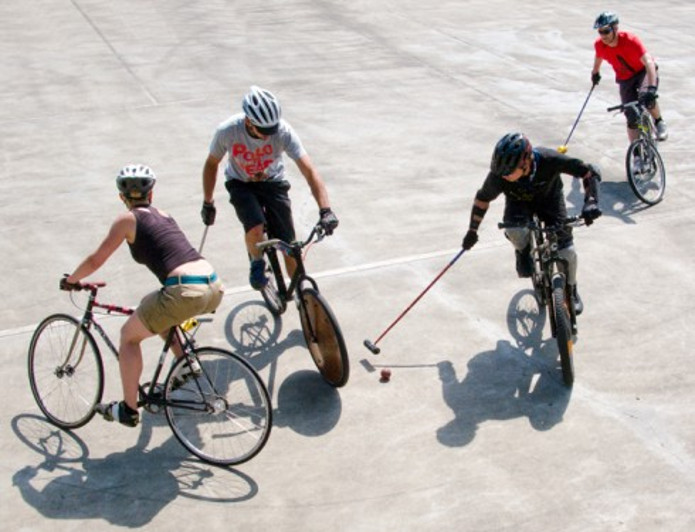
  • Games: Bike Polo, Flat Land, Bike Trial and Pum Track
  • Movies, books, magazines, etc. related to bikes presentations

For more info, check www.fmb7.org