The Incredible Underground Bicycle Parking Garages of the Netherlands
Leave a reply
The Sustainable Development Goals are a collection of 17 global targets set by the United Nations (UN) for the year 2030. They got ahead thanks to the votes of the UN member states back in 2015. The targets are:
What does this have to do with bicycles? Well, a lot. Indeed, bikes contribute to reach 12 out of 17 goals. Let’s go step by step.
– No poverty: Bikes constitute a cheap way of transport which much more people can afford in comparison with cars or motorbikes. Investing low money on it allows using the rest of it in other issues like buying better machines if you are a local shoemaker or increase your sheep herd in case you are a shepherd.
– Zero hunger: Related with the previous point, the less money you need for transportation, the more food you can buy.
– Good Health and Well-being: You make sport when riding a bike, even if it is an electric one.
– Quality Education: The fact of costing much less than cars enables population in developing countries to use it to access to schools and colleges. Otherwise, millions of students would be forced to abandon their studies.
– Gender Equality: Pedaling does not discriminate by genres. Both, women and men do it the same way.
– Affordable and Clean Energy: By using your legs strength instead of fossil fuels when moving allows for an inevitable reduction in pollution.
– Decent Work and Economic Growth: Due to the fact that most economic stakeholders in the bike ecosystem are SMEs, and the small economy improves thanks to small workshops and bike stores, local communities benefit from bicycles.
– Industry, Innovation, and Infrastructure: Partly related with the previous goal, the more bikes, the more bike infrastructures are needed. Innovation is on the way in, for example, bicycle frames, brakes, tires, inner tubes, you name it.
– Sustainable Cities and Communities: Less pollution and energy consumption leads to sustainable societies. Bikes help reach them.
– Responsible Consumption and Production: In the process of manufacturing a bike, only the essential production resources are required. And again, the energy consumption in the use stage is considerably reduced when compared with pollutant ways of transport.
– Climate Action: Bicycles fight against climate change since they are an environmentally friendly way of transport.
– Partnerships for the Goals: The worldwide biking movement is a good example of this goal.
Could it be possible to ride bikes on the very village which has seen some of the most impressive athletes in history like Eliud Kipchoge, Jonah Chesum, Florence Kiplagat, Edna Kiplagat, David Rudisha, Asbel Kiprop, Wilson Kipsang or Abel Kirui? And what if we add extreme conditions regarding climate and lack of infrastructures? This place is Iten, a village at 400 kilometers from Nairobi (Kenya).
Lots of runners go to Iten following the trail of their athlete stars. Some of them marvel at discovering a local riders team called Kenyan Riders. They even wonder more when checking how irregular, abrupt the terrain is for a vehicle that has to make permanent contact with the soil. This fact provoked continuous punctures, hence stops to repair them and discontinuous training. Team players could not buy high quality tires as they were short of cash. As time went by, the triathlete Rubén Gallart visit Iten as a part of his training. He saw the poor conditions of local riders and proposed himself earning money to help bicyclers buy better tires. He knew the Tannus airless tires would fit the continuous puncture problem. Thus, he contacted the company and they were delighted to being involved in the project to his surprise. The firm helped Kenyan Riders to overcome their precarious conditions. Nowadays, they train happy with the tires and dream with becoming first level sportspeople in order to win international competitions. After all, they live at 2,500 meters above sea level, and their athlete brothers are worldwide recognized because of their merits.

Lea Schaepe was born in Berlin, Germany, and has been practicing one of her passions for years: Acrobatic cycling (link a lo anterior). Such enthusiasm has made her one of the best in this sport with international recognition.

Indeed, Lea has won a dozen national competitions just in Germany and offers artistic cycling exhibitions and workshops in a lot of countries. You can follow her in her Instagram page.
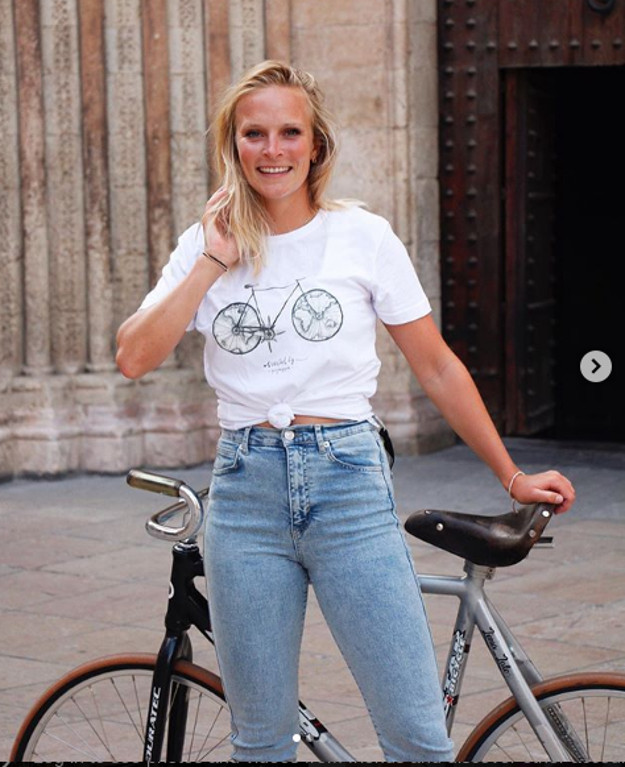
Lea learned to ride her bike in many unconventional ways while practicing this art year by year, primary in Germany. Those photos demonstrate how spectacular she is, and this is nothing compared to see her live and direct.
If you have the opportunity to see her in action, do not miss her and enjoy the time!