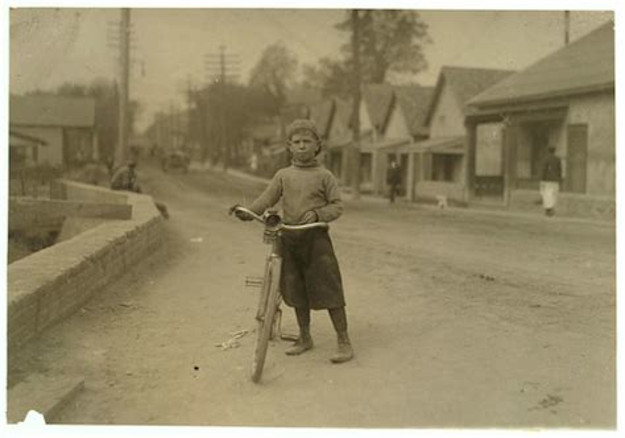
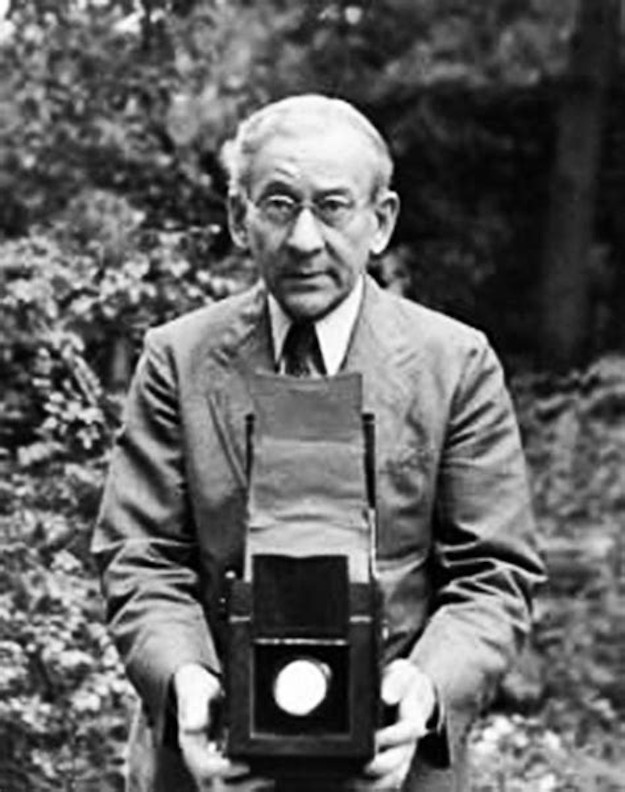
The New York photographer Lewis Hine took photos from child messengers at the beginning of the XX century. He showed how widespread child labor was at that time as well as some other habits like child smoking that we consider disturbing today. These children were used as couriers to deliver goods from newspapers to medicines from small and big businesses. They worked as small ants coming and going which preoccupied the most progressive sectors in the American society.
In 1908 the National Committee for Child Labor hired the photographer and sociologist Lewis Hine in order to document the labor conditions of such small people. He traveled the USA for nine years with a humble equip consisting in a 13 x 8 cm camera, an unstable tripod and a magnesium flash. Such effort was the start of considering Hine a pioneer of social photography.
What Hine found was worse than he had imagined. Children suffered from leonine working conditions, starting working at the age of nine, they often pedaled until dawn and slept under a bridge. The luckiest ones combine school with long hours of pedaling. Some times they entered the worse neighborhoods in which arms dealers, drug addicts and pimps operated. Some others worked for unscrupulously bosses. Hine wrote a sentence in their photos which summarized what was behind every picture. This fact allowed people understanding the real feeling they passed on them.
The situations that Lewis Hine shot were extensible to both large cities such as San Francisco, Boston, Houston or New York to small localities, and no matter how big a firm was i.e. giants like Western Union as well as small courier business were involved.
After taking the photos, Hine presented them to the Committee which used them as arguments in order to reach the dreaming Keatings-Owen Law in 1916. This established restrictions as it comes to legal working age and work shifts. However the Supreme Court repealed it, the spirit of the original Law influenced the New Deal which did not allow for child labor in the 1930’s.
The history of Hine continued by being part of the Red Cross in the First World War which allowed him traveling in Europe and taking lots of photos. Nevertheless, he ended his days in the same poverty that had been denounced in his pictures. He left 5,000 photos which were donated to the Photo League by his son. The Photo League was dismantled in 1951 and the Museum of Modern Art of New York considered them as irrelevant and refused them even though the enormous social value they had. So discouraging. Finally, they were donated to the International Museum of Photography George Eastman House in Rochester where you can see some of them.