Best Station in the Netherlands
Leave a reply
Frank Zappa is known for being a musician, songwriter, composer and bandleader. As an exponent of the satire American culture, his work is characterized by nonconformity, sound experiments, musical virtuosity and improvisation. If you are asking yourself what is one relation of Frank Zappa with bicycles, just go on reading.
Do you know that the first TV appearance of Frank Vincent Zappa he played… two bikes as musical instruments? It sounds crazy, but I promise it is true. He appeared on Steve Allen’s syndicate late night show in March 27th, 1963. Precisely, he used a bow borrowed from the band’s bass player and drum sticks. Then, the twenty-three year old musician continued by plucking, banging and bowing the spokes of the bikes. As a result, he produced funny, strange sounds from his innovative instruments. Indeed, he announced he had played bicycles as musical instruments for two weeks at the beginning of the performance, as a clear expression of the humor he showed.
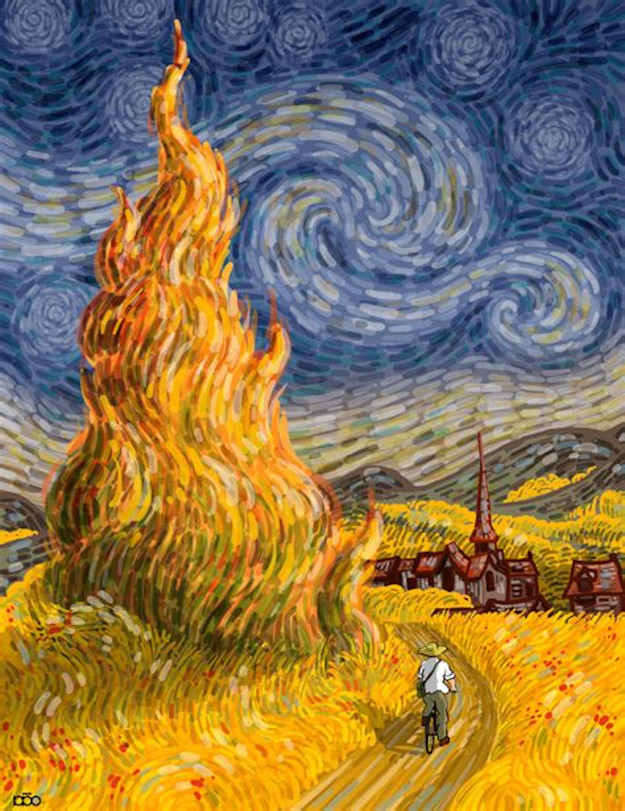
Some bike-fantasies deal with the possible relationships of some historical people no matter whether they enjoyed a bicycle or not. Just imagine how it could have been as it comes to King George, Joan of Arc, Gregor Mendel or Grace Hopper. The Iranian painter Alireza Karini Moghadam fantasizes with Van Gogh.
Van Gogh is known for being an impressive painter as well as for suffering psychological problems. Regarding this, some people thought he was always in bad mood, although this is not true. Alireza knows it and tries to express it in their paintings. Imagination paves the way. Indeed, thanks to his deep studies on Van Gogh, he is convinced that the painter loved life and thus paints him with a smile on the same landscapes and similar paint techniques. Vegetables capture most of attention, similarly to the yellow and blue colors, and of course Van Gogh himself. Moreover, Frida Kahlo, Kanagawa, Leonardo da Vinci and Edvard Munch influence him.
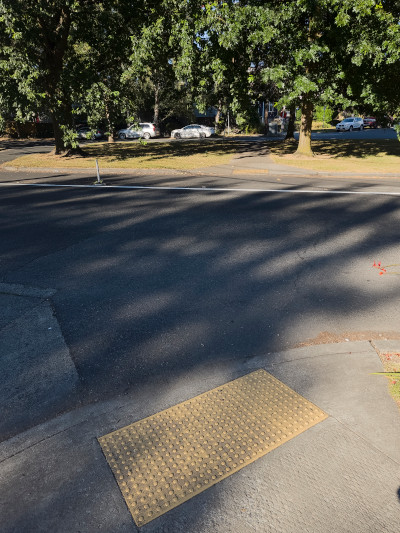
Seattle, and most US cities, are full of paintless crosswalks.
You know they are crosswalks because there are ramps installed on the sidewalks with the typical dotted/yellow covers to help blind people.
However, drivers have a hard time seeing the ramp, not to mentioned if there are parked cars before the crosswalk, so painting that zebra crossing is vital if you intend drivers to stop when there are people crossing.
I have personally seen drivers honking the horn at pedestrians using paintless crosswalks, and a couple of almost accidents.
So please, US departments of transportation and urban planners, could we make sure pedestrians won’t be run over by cars by actually making crosswalks visible to drivers?, please.
Media surrounds us and we constantly are informed by it. It has an impressive power to both educate and manipulate people, and we should demand seriousness and rigor. After all, narrating reality should not be so difficult.
Regarding biking, media makes mistakes with the word “accident” often. Take for example a rider runned over by a car. Usually, media expresses it as an “accident” in order to probably show a shocking word to attract reader’s attention. In reality, a reflection is needed to express what is behind the event since the complete piece of news is explained only after the striking headline. It also happens in the TV news.
The Associated Press style book, which is published since 2016, recommends the use of “crash” instead of “accident” in such cases. This way blaming the biker is avoided because “accident” implies the car has had nothing to cause the death while this it not true. Due to the fact that the rider is usually the weaker actor on the road, he typically suffers the injuries. The word “accident” seems to accept that the crash is unpredictable, whereas it could surely have been avoided and prevented. In the end, small changes in media contribute to modify public opinion about biking which in turn will provoke an increment in public pressure to reduce casualties on asphalt.
What happens every day at this I-5 downtown Seattle highway exit?.
Mostly nothing since the highway gets clogged with cars trying to go to the office so they move slowly.
But outside the peak hours it turns into a trap: an almost empty highway gets you into a short tunnel with a 90 degree turn, no-visibility downtown exit, this is the result:
There are already plenty of signs telling drivers to slow down, but here are some possible solutions that may help: speed bumps to make sure distracted drivers lower their speed, a traffic light before entering the tunnel that stays red and only goes green when it detects the car has actually stopped, permanently closing the exit since it’s almost impossible to give more visibility.