Author Archives: jm

How not to build a bike line

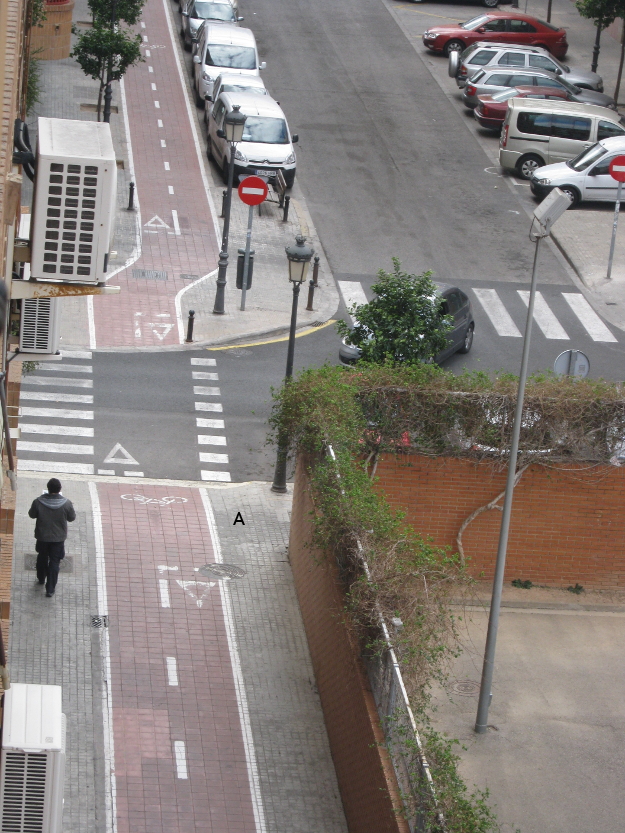
Bike lines constitute an easy and visible way to put on a brave face regarding green politics. This is clearly how non- or little-cyclist believe it. In real life, it is far more complicated. Bike lines produce a false feeling of security while riding, specially when it is shared with pedestrians. Accidents are produced by distractions or by their bad locations. For example, look at the point A in the next photo.
1

The fact of the small distance between the bike line and the wall, makes it perfectly possible to suffer an accident. This idea is reinforced if you take into account that the building at the right is a school and children run freely in working days.

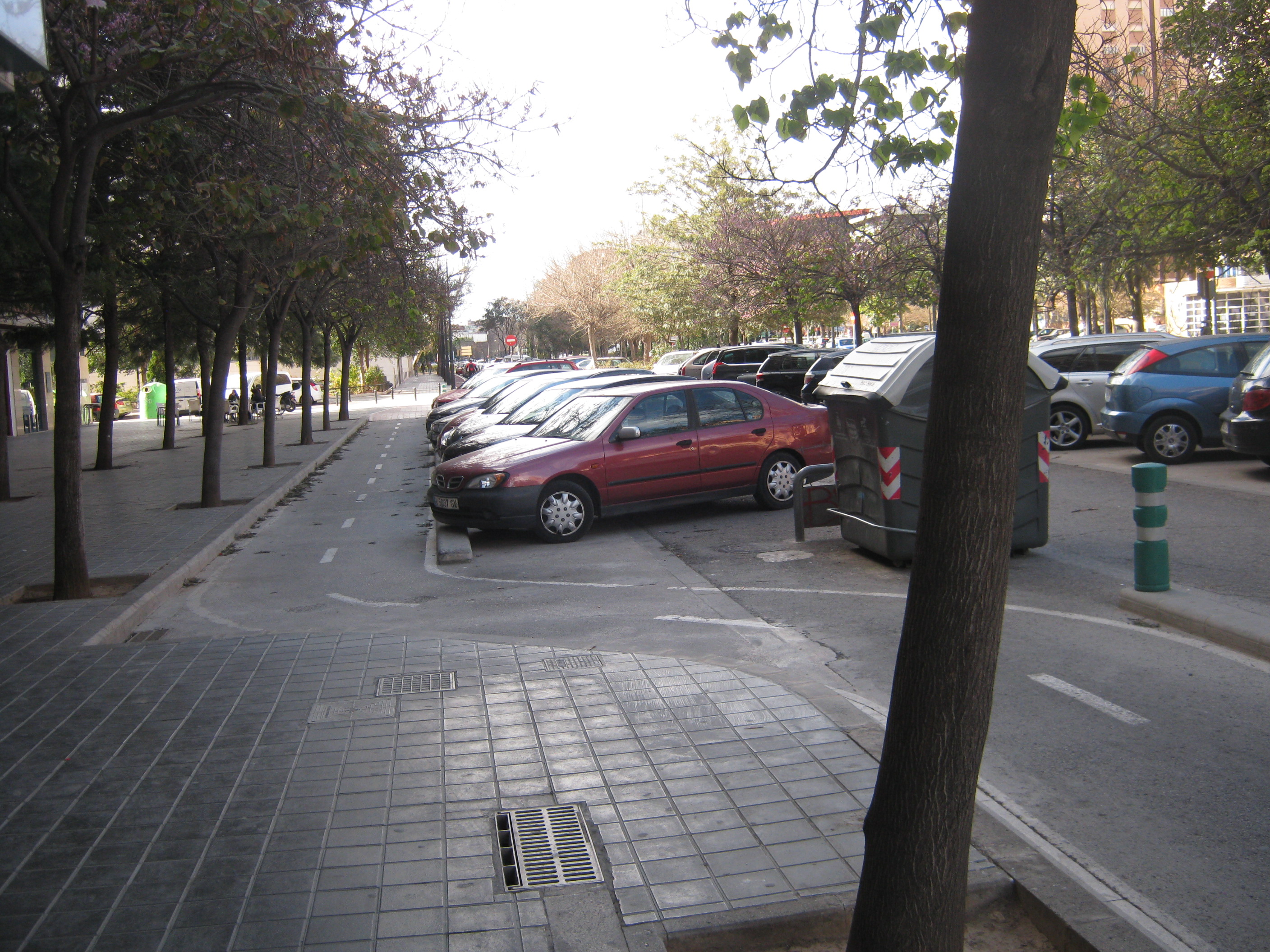
Sometimes bike lines are given in to cars. In photo number 2, the bike line curves in an almost chaotic way in order to respect the parking car. Again, most cities are proned to cars, not to people.
2

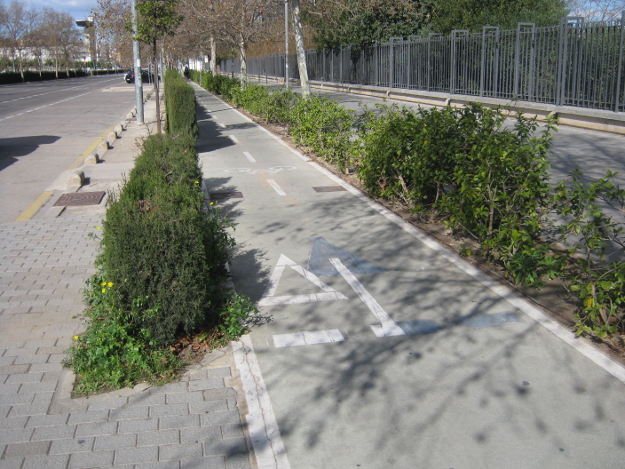
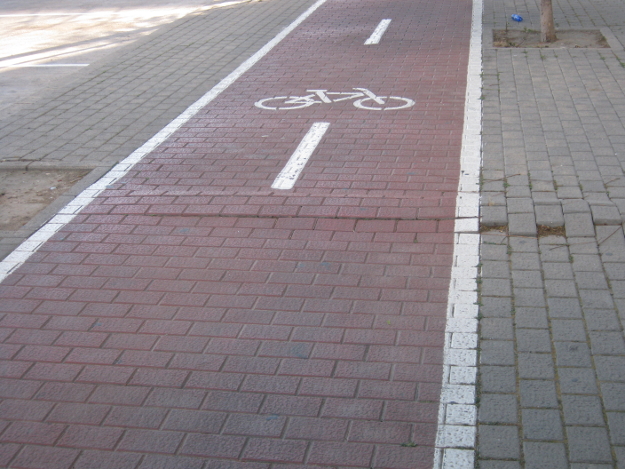
Few times bike line colors confound cyclists, like in the case of photos 3 and 4, both corresponding to the same avenue and different pavements. Here, red and green are used instead of define a homogeneous color.
3 4

Photo 4 also shows obstacles and potholes make riding difficult. Constructing a bike line is much more than just painting lines in the pavement. Maintenance is needed and cases like photos 5 and 6 should be avoided.
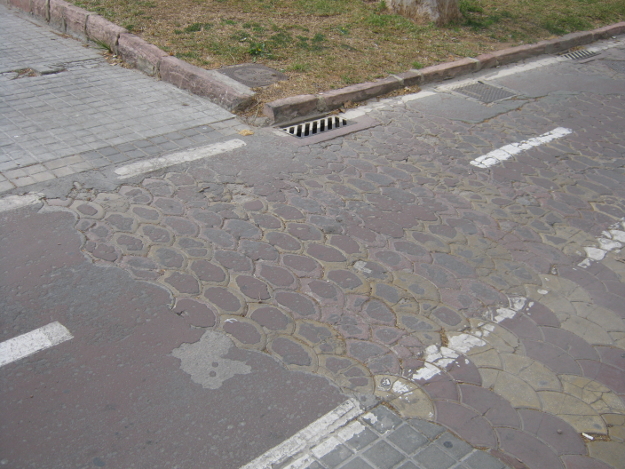
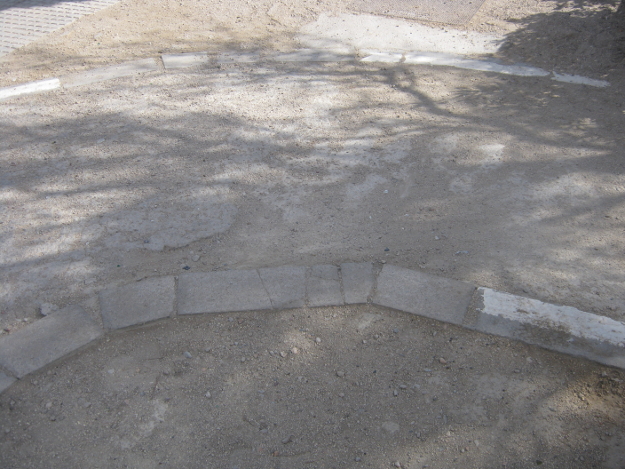
5 6

Absurdities like photo 7 can make us thinking in another reason why bike line should be on highways, not on pavements. Here, people and bikes are virtually incompatible.
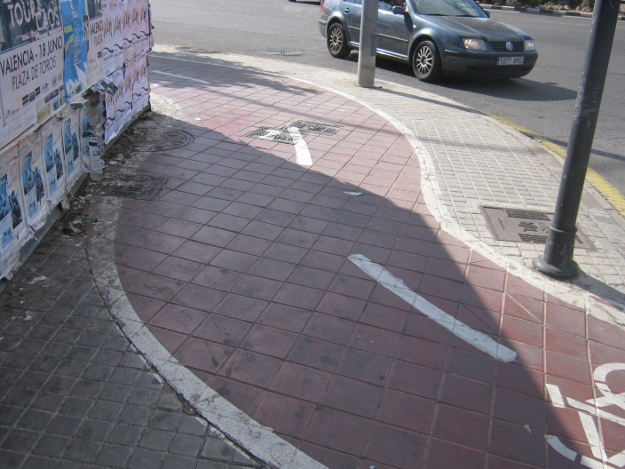
7

Moreover, curbs should be considered to facilitate an easy riding and avoid unnecessary jumps such as those in photo 8.
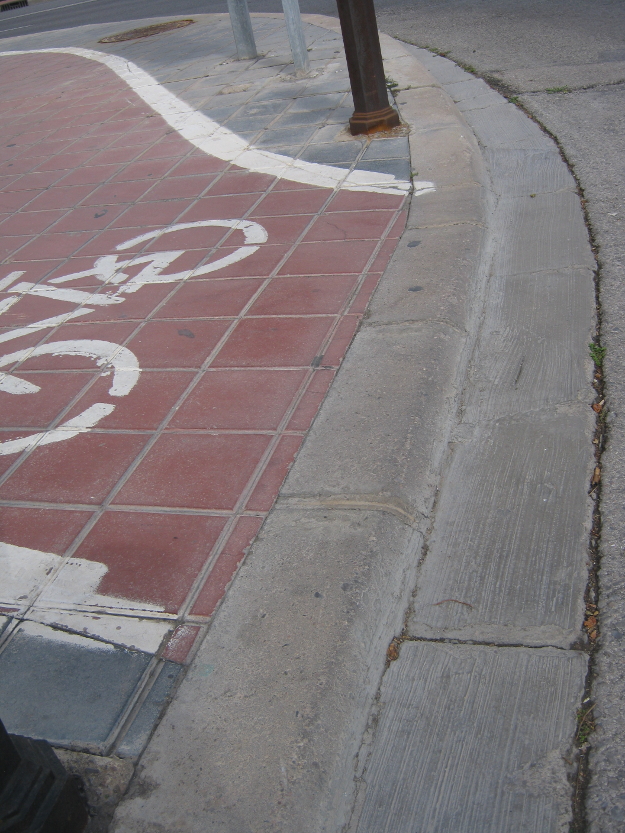
8

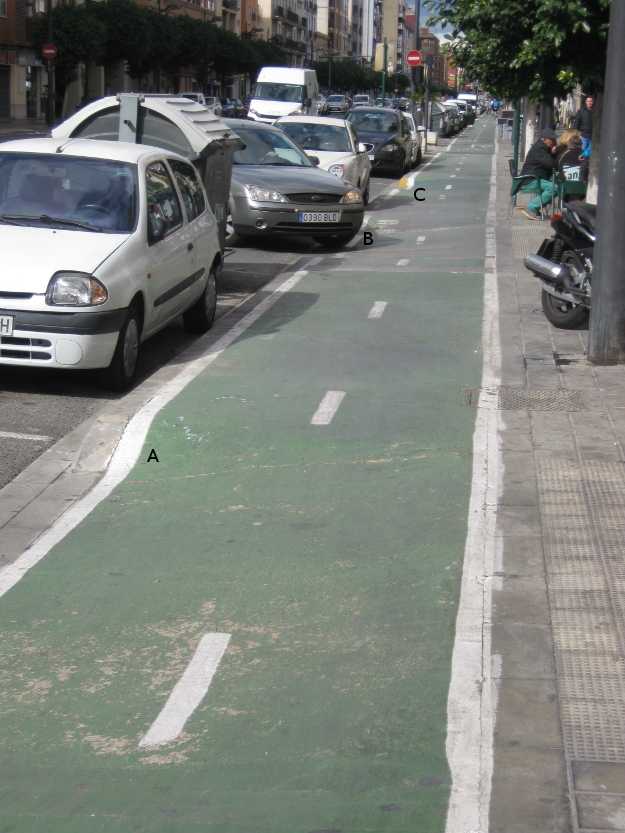
Finally, if you want a free ticket to the roller coaster, just ride in the photo 9, where there are three ups-and-downs to access to car parkings corresponding to points A, B and C.
9

Bikes vs cars?

There are two basic ways to cross a city on a bike. On the one hand, there is the officially preferred path which consists on a bike line commonly designed by non-cyclist technicians (we will deep in this issue in the future). On the other hand, some bikers are prone to share the pavement with cars without physical barriers.

This last point has to do with the lack of secure alternatives within the cities and it’s likely to create a clash between the long-time favored, polluter motor vehicles versus the green model of sustainable transport on a broad scale, although bikes have been with us for ages. This is precisely one of the fears of compulsive car drivers: losing privileges in favor of bicycles.

What they do not see is that the more bikes in the streets, the better air we breath, not to mention the cuts in car accidents and their gravity, or the reduction in oil dependency among others. One of the easy-measured key indicators in the bad relation between cars and bikes is the number of horn hokes you hear when riding in a highway. Drivers who are aware of this issue respect cyclists as they feel us as part of the community and they could also be bikers themselves on the weekends. This synergistic model is what a lot of local governments are looking for. But dozens of years allowing everything car-related (including alarming dead figures in car accidents) is making this ideal coexistence tough. Nevertheless, important steps are being made towards the development of the bike movement and we thank them as part of the search of a better future.

Valencia’s Critical Mass

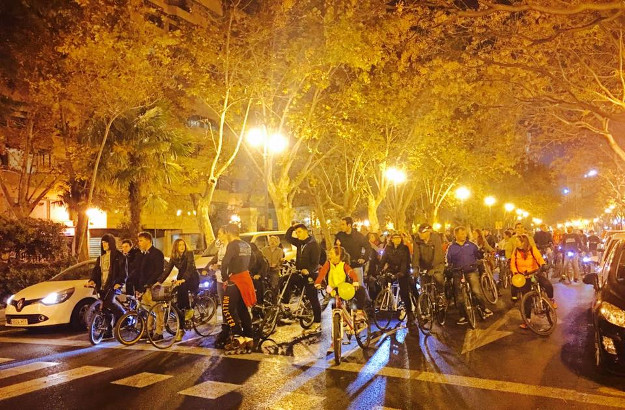
I am going to talk about the Critical Mass in Valencia (Spain) today. It starts at the Virgin square in downtown the first Friday of every month at 19:30, no matter if it is raining, the wind blows, is a holiday or the sun shines. This fact as well as the climatic variations in the four seasons make that the number of participants varies along the year, reaching the highest figures in spring, summer and the first months of autumn.

It is particularly interesting that the Critical Mass has no direction, neither organizers. This way it can end in the same place where it starts, the beach, the former riverbed, close villages and so on.

Regarding the bikers, everyone can participate in this ride from children to senior citizens since the reached velocities allows to enjoy it without even sweating. Sometimes politicians come such as Giuseppe Grezzi, the current Mobility Advisor who is making efforts in favor of sustainable mobility. Moreover, one can see strange bicycles like the bike-monsters, the “bici-gelat” (a horchata truck bike, being horchata a typical Valencian tiger nut milk drink) or the odd boat-bike which swings as it was a true boat. People in handbikes and skaters are also welcomed. To contribute to the festive ambient, participants dress up like in carnival from time to time.

As far as logistics issues are concerned, police closes the Critical Mass to calm traffic almost every time. Indeed, bikers close themselves perpendicular streets to where it passes chatting to car drivers to pacify them because not each and every driver is a good one. What is more, the Spanish legislation is partly unknown, specifically the point which indicates that a group of cyclists is treated as a sole unit referred to zebra crossings, stops, traffic lights, traffic circles… One important point constitutes the fact that the bus line is respected as it represents a path of sustainability.

Finally, it ends with a huge applause and the ride is a success due to the collaboration of all people involved.

Foto by Antuan Toledo

Foto by Antuan Toledo

The Critical Mass

Let me start by the beginning. The grounds appeared in China as a consequence of a characteristic cyclist behavior. It consists in a cyclist waiting in an intersection until a group of bikers is created. Once they have the sufficient power and visibility, they can cross it and force the cars to stop. By the way, the name of “critical mass” is taken from this film.

Then, it jumped up into the U.S. and specifically to San Francisco as the first “official” Critical Mass. Here, the participants had to fight against the lack of understanding of local authorities and dramatic actions were even taken. The documentary We are traffic! shows those initial moments. As you can see, the atmosphere was committed with all the participants wanting to spend a good time while at the same time they defended claims such as a better world, pollution reduction, practicing more sport, reducing street accidents and so on.

Today it is celebrated in more than 300 cities worldwide once a month. The specific date varies between places and it is a good idea to contact with local bikers to join it. So remember, if you see suddenly cyclists on the street, let’s say dozens, hundreds or even thousands, you would be probably seeing the Critical Mass. It could also be possible that it did not still exist where you live. If this is the case, why don’t you start it?.