A funny and possibly effective way to protect your bike
Leave a reply
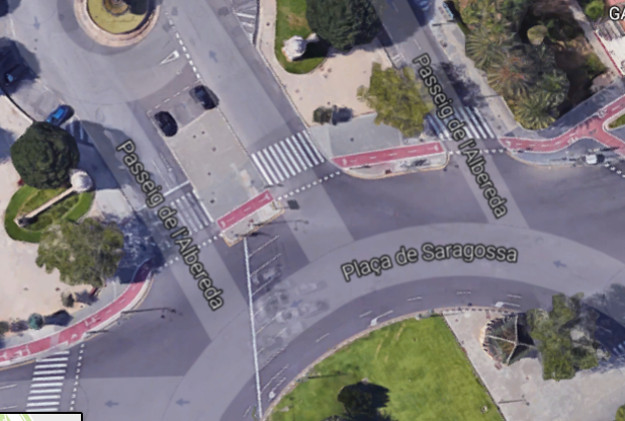
Distraction is the last main traffic problem in Valencia. They can affect to every driver whether they drive a car, a bike, a truck, a motorcycle, etc. Causes are variate like the mobile phone, radio, disc reader, gps, you name it. In this post, I am going to center in the distractions due to exclusively the road. In the next picture, one can see a cross with the cars coming from a one-way road.
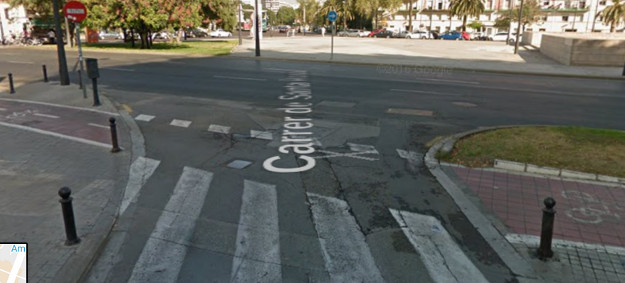
 The problem here is that the bike-line is bidirectional and car drivers often forget to see to both sides. As a result, car accidents have occurred here.
Another example is given in conjunction with multiple traffic problems I have explained in this series. If we mix distractions plus high speed plus amber traffic-light, we have the next photos.
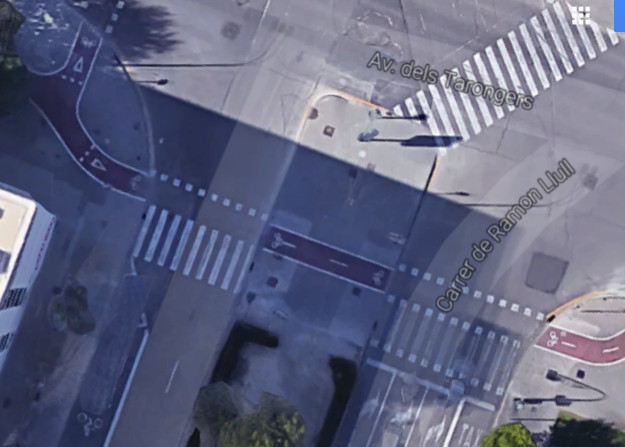
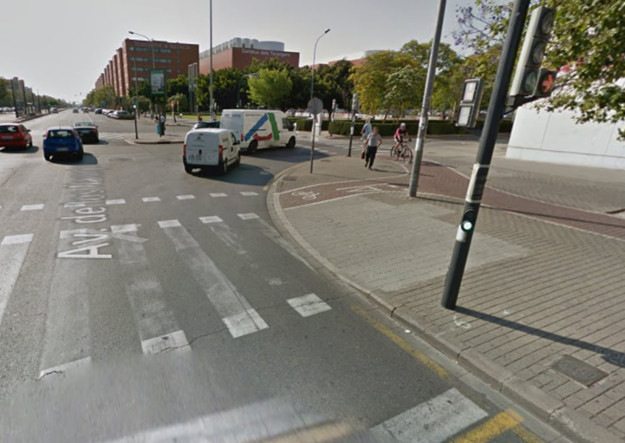
Cars come with excessive speed from the avenue named dels Tarongers. They can see the amber traffic-line, but they do not stop unless a pedestrian or a bike is really close. Nor do they see on both sides and as a result of bike reaching speeds of 10-20 km/h it is a miracle that there had not been any death biker at this point.
Excessive cars speed is a constant problem within Valencia. Speed limits range from 30 to 50 km/h depending on the city zone. Most car drivers do not comply in respecting them. Police efforts are inefficient and thus it is common to see cars driving at 70, 80, 90 or even 100 km/h every day. Drivers do not become aware this awful way of driving puts into risk their lives and those who surround them. This fact also translates into risk for bikers quite often. Crossings in which bike-lines are involved are in dangerous due to this. Apparently quiet roads like in the photos become problematic. It is usual that cars pass the traffic-light line as they drive with excessive speed. Moreover high speed provokes a reduction in the time drivers have to adapt to an unexpected event like a bike crossing a road on a bike-line. If they drove according to the law, there would be no problem of this nature. On the contrary, high speed appears as a key factor in every study on the main causes of car accidents not only in Valencia, but also in the rest of the Spanish roads.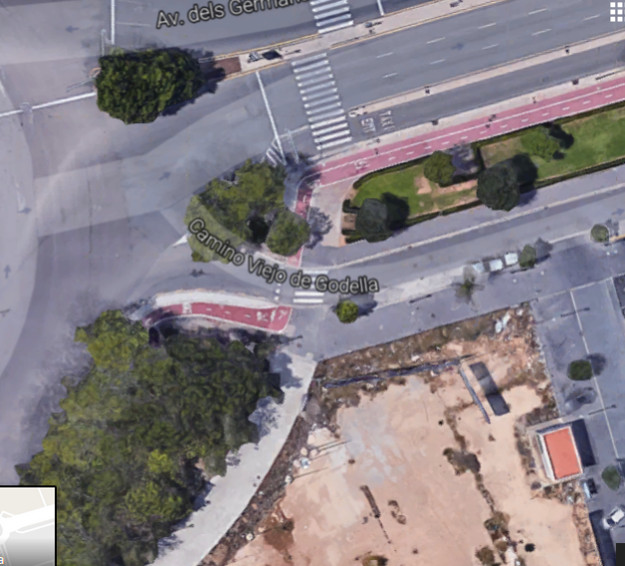
Awful bike-lines are located in several zones of Valencia. Although the new government is making efforts to eradicate them, there is still a long way to do. One of these is the infamous bike-line in the El Puerto avenue. It was built some weeks before the America’s cup back in 2007.
The set is discouraging as you can see in the photo.
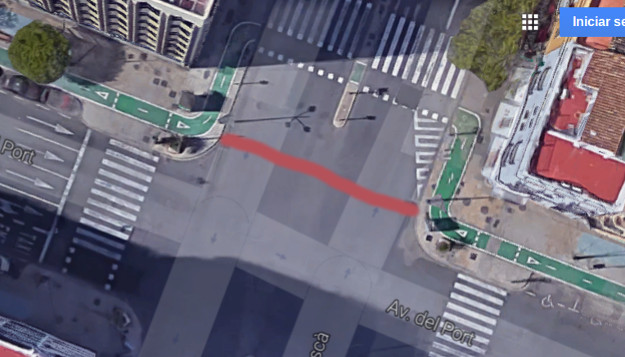
Not only forces you to make an unnecessary turn, but also this particular point presents additional problems. Instead of following a logical path marked by the red line, bikers must also deal with reduced visibility thanks to the stand and some distracted pedestrians as this bike-line goes on the pavement.

Another example of a bad bike-line is shown next.

In this case, there is not enough distance between it and the parked cars. It can be that if a co-pilot does not realize a bike is approaching from the right or the left, an accident is guaranteed.
One common problem for cyclists in Valencia is the existence of light-traffics in amber. I am not talking about the traditional cycle of green-amber-red, but rather amber or no-light specially in turns to the right. According to the Spanish law, cars should extreme attention in this circumstance. The point is the opposite to what should occur. Most car drivers do not take it into account and hence crash happens sometimes causing deaths. What is more, these signals are put next to zebra crossings while the bikes and pedestrians traffic-light is in green. In the next pictures you can see a classic example.
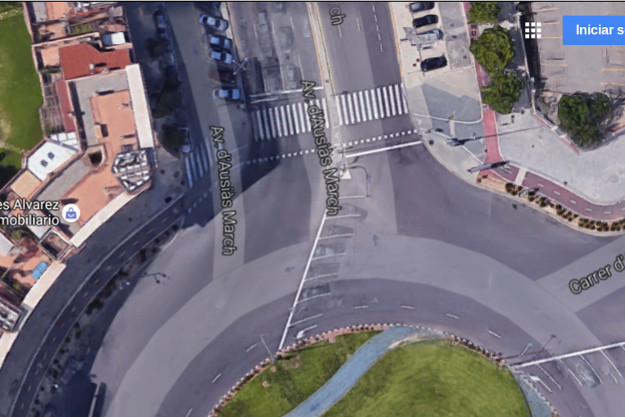
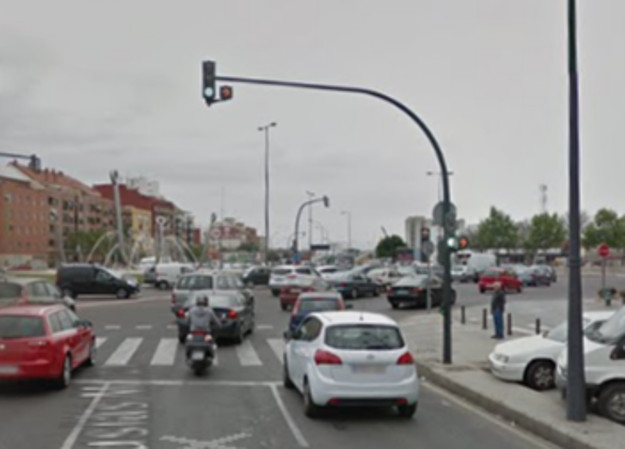
In some other parts in the city in which no bike-line is involved, riding on the road is also dangerous with amber light-traffics:
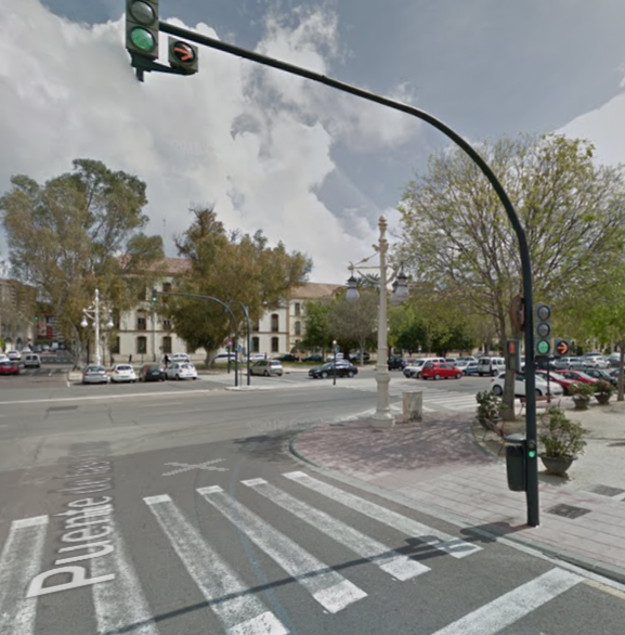
In this case smart assess try to overtake you by accelerating their cars while you are starting to ride. This causes a dangerous situation because most of them are idiot who do not care imperil their lives and those of people surrounding them.
There is a curious infrastructure in Valencia which I rarely see in any other great city in Europe or at least in the most advanced European countries as it comes to sustainable mobility. They are the “urban highways”. In other words, I am referring to avenues with three, four, five or even six lines in each direction. This causes a lot of pollution and noise. One secondary effect consists of cars not respecting the traffic-light line. In the next figures, you can clearly see them on the road.

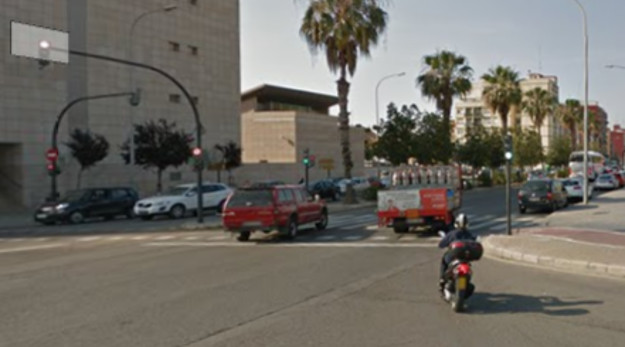
And still lots of cyclists have had fights with cars and motorcycles which have not respected it. It is just a matter of time that a crash occurs.
There is almost a unique way of biking as bikers are. Each person has its own riding style. Some people prefer doing it slowly while enjoying the travel. Others are in favor of speed and adrenaline, and do not hesitate in counting how many time they spend on the streets without paying any attention in what surrounds them. This points is the main source in distinguishing cyclists in broad strokes.
We have sport cycling as a valid exercise which can be done within a city or a village. These cyclists are dressed in highly colored, fashion maillots, commonly in accordance with the official strip of a particular cyclist team. They also wear helmet even in places where it is not compulsory and ride so fast that can overtake cars. In front of this view, we see the urban bikers.
There is a myriad of them who are characterized by riding not so fast and most of the time in a friendly way. They use the bike to go to work, carry children to school, go out with friends, etc. Similarly as pedestrians, the garment they wear is variate. It does not matter whether you wear jeans, smart dresses, scarfs, tracksuits, you name it. Usually the bikes are not so expensive as in the case of sport cyclists and the bikes they use can be more than 30, 40 or 50 years old. The natural place of sport cyclists are the streets whereas urban cyclists prefer bike lines or also streets. I will talk more about this point in the future.
Moving on a bike is beneficial to you and people around you. It enhances your mood and indirectly your neighbors’ health since you do not produce pollution. These statements seem quite clear but incorporating them is quite difficult. This change can be produced by social pressure as it was done in the Netherlands in the 70’s, or by selecting the right persons in key positions. Some people were surprised in seeing the former London mayor Boris Johnson in the city metro some years ago. It appeared to them a leading figure could not use the public transport. Obviously, this is wrong. Going a step further, putting elected urban cyclists in the public institutions is specially advantageous. In Valencia both, the mayor and the sustainable mobility city councilman, have been practicing cycling for ages and even participating in demonstrations against deaths in car accidents. The new point of view regarding biking has allowed the city to overcome the pig-headedness of the former government and implemented mobility changes from the biker perspective, producing a tangible progress in sustainability. Although there is a way to achieve the total sustainability, a lot of cities and villages around the world are moving in the right direction step by step.
Biking has been define as a good way of practicing aerobic sport. This type of exercise allows burning calories and avoids what the WHO has defined as the pandemic of the XXI century: Obesity. This disease provokes a lot of cardiovascular problems, among others. Its mechanism is simple, if you eat more calories than you burn, you gain weight. Conversely, if you burn more calories than you eat, you lose weight. The fact of riding helps you to lose weight as well as to enjoy the environment and relax yourself. It also avoids injuries which can be produced in other aerobic sports like running. So it makes up for the sedentary life we live, the TV, seated or playing video games hours we spend.
Biking is considered a valuable sport since it protects your heart. This aerobic way of moving improves your health because it helps oxygenated blood to be pumped by the heart to deliver oxygen to the working muscles, mainly those in your lower part in your body. For this reason it forms part of the “cardio-sports” which improve your cardiovascular fitness. Another characteristic is that it benefices your muscle formation and toning. Also, by practicing it regularly your life-years are increased (wow!) (http://www.ncbi.nlm.nih.gov/pmc/?term=10.1289/ehp.0901747) as well as you better your mental health (http://www.ncbi.nlm.nih.gov/pubmed/17314466?ordinalpos=2&itool=EntrezSystem2.PEntrez.Pubmed.Pubmed_ResultsPanel.Pubmed_RVDocSum) and your immune system (http://familyonbikes.org/blog/2011/06/the-health-benefits-of-cycling/). Moreover, you coordination improves as your are constantly moving both your legs and your hands. There is no need to spent hours and hours on the bike to feel its benefices, just a few minutes. Nevertheless, aerobic exercises such as biking can become anaerobic if performed at a too high intensity level.